Kids Memory Game Box: Laser Cutting Boxes Review
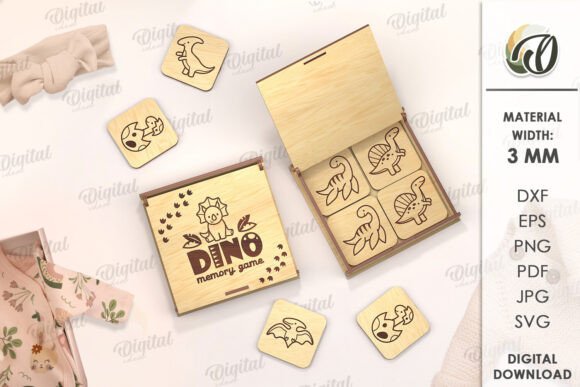
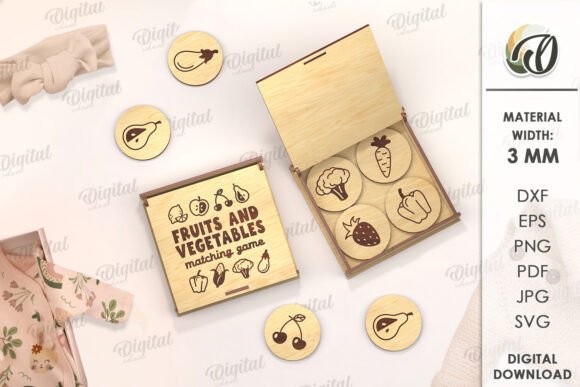
When I first opened the Kids Memory Game Box Lasercut file, I was preparing a new product drop for my Etsy shop and Creative Fabrica storefront. I had been searching for a graphic design asset that could serve double duty as both a standalone digital product and a foundation for multiple commercial design projects. This file immediately caught my attention because it balances a playful, handmade aesthetic with the kind of clean geometry that works well for laser cutting and Cricut projects. The design feels cheerful and approachable, but not overly cutesy, which means it can attract both parents looking for a fun activity and crafters who want to build a brand identity around educational toys.
First Impressions and Niche Appeal
The Kids Memory Game Box Lasercut has a distinct personality. It leans into a modern, minimalist style with just enough whimsy to feel child-friendly without sacrificing the clean lines that laser cutting enthusiasts expect. The mood is playful but not chaotic, educational but not dull. It reminds me of the kind of printable design you would see in a boutique toy shop or a handmade business that sells on Etsy or at craft fairs. The visual personality is warm, friendly, and slightly Scandinavian in its simplicity. This makes it a strong candidate for small business branding that targets parents, teachers, and gift buyers who value quality and thoughtful design.
From a selling perspective, this asset targets a specific buyer: the creative entrepreneur who wants to offer a digital download that feels complete and ready to use. Because it is a memory game box, it naturally appeals to the educational and toy niches, which are consistently high-performing categories on creative marketplace platforms. The design does not try to be everything to everyone, and that focus is a strength. It lets you build a design bundle around a clear theme rather than mixing unrelated styles.
Real Shop Scenario: Testing the Asset Before Launch
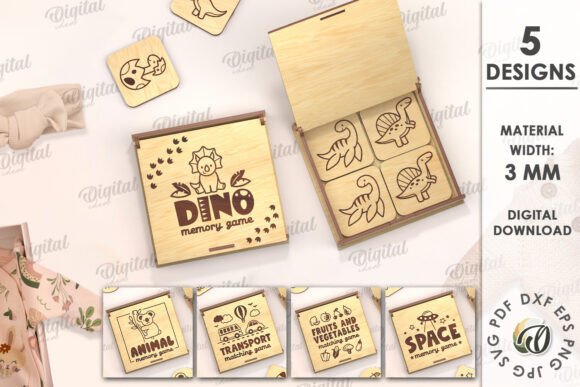
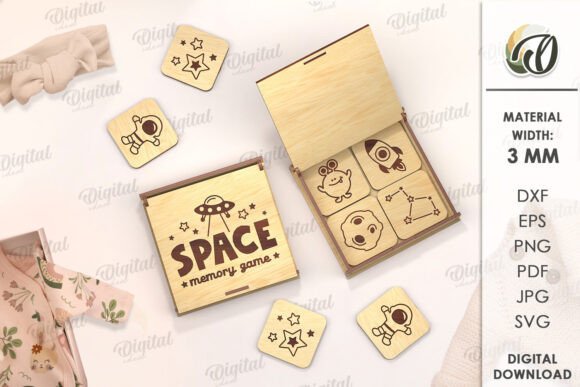
Imagine you are preparing a new collection for your Etsy shop or your Shopify store. You want to list a few variations of the same core product to build brand consistency and increase your chances of being discovered. The Kids Memory Game Box Lasercut gives you a solid anchor for that strategy. Before I publish any listing, I always test the file in a few different contexts. I open it in my design software, check the layers, and preview how it behaves as an SVG design for cutting machines and as a PNG design for print-on-demand mockups. The file comes in a zip folder with one design in SVG, DXF, and other standard formats, which is exactly what I look for in a commercial design asset. The variety of formats means I can sell it as a laser cutting template and also repurpose the graphics for sublimation designs, t-shirt designs, or mug designs.
I also run a quick test on a product mockup to see how the design reads as a thumbnail. The memory game box format is inherently visual, so it performs well in listing images where you need to communicate the product purpose at a glance. The visual hierarchy is clear, and the design does not get lost when scaled down for a search results page. This is a critical factor for Etsy products and print-on-demand listings where first impressions determine click-through rates.
Product Applications Across Selling Platforms
The real value of a graphic design asset like this one is its versatility. The Kids Memory Game Box Lasercut can be used in a wide range of product categories, and I have tested several of them in my own shop. Here are the applications that work well:
- SVG products and clipart bundles for Cricut and Silhouette users who want to cut the box from wood, cardstock, or acrylic.
- PNG designs for sublimation designs on mugs, tumblers, and tote bags. The clean lines transfer well onto fabric and ceramic surfaces.
- Printable wall art for a child’s bedroom or playroom. The game board and pieces can be framed as a set.
- Planner stickers and greeting cards with a matching theme. The illustration style works in both digital and physical formats.
- Canva templates for social media posts, blog graphics, or promotional visuals that advertise the memory game as a product.
- Scrapbooking kits and digital paper packs where the game box becomes a decorative element.
- Packaging design for small businesses that sell physical educational toys. The file can be adapted for brand identity materials.
Each of these applications opens a different revenue stream. As a digital product creator, I appreciate when an asset can be listed in multiple categories without needing major redesign work. The Kids Memory Game Box Lasercut fits that description because its core geometry is strong enough to stand alone and flexible enough to pair with other elements.
Product Presentation and Mockup Strategy
How you present the Kids Memory Game Box Lasercut in your shop matters as much as the design itself. I have learned that product mockups and thumbnail appeal are the difference between a listing that sells and one that gets ignored. For this asset, I recommend creating at least three types of preview images:
- Lifestyle mockups that show the game box in a real setting, such as a child’s room or a family game night scene. This helps with storytelling and builds customer trust.
- Flat lay product shots that highlight the cut lines and the individual pieces. This is especially important for laser cutting buyers who need to see the detail before purchasing.
- Thumbnail versions that test how the design reads at small sizes. A busy or low-contrast thumbnail will hurt your click-through potential.
The perceived value of the listing increases when you show the product in multiple contexts. Buyers want to imagine how they will use the file, and a well-crafted mockup set does that work for you. The Kids Memory Game Box Lasercut has a clean, open layout that photographs well, which is a major advantage for digital download sellers who rely on strong visuals.
Where the Asset Works Best
After testing the Kids Memory Game Box Lasercut across several product types, I have found that it performs best in these scenarios:
- Large product previews where the full design can be seen, such as in a listing hero image or a social media post.
- Themed bundles that combine the memory game with other educational or toy-related designs. It anchors a collection nicely.
- Decorative layouts where the box shape adds visual interest, such as in a scrapbooking kit or a planner sticker set.
- Printable products where the buyer expects a polished, ready-to-print file. The SVG and DXF formats are clean and easy to work with.
- Merchandise graphics for t-shirt designs or mug designs where the memory game motif is printed as a standalone illustration.
- Social media graphics and blog graphics that promote the product. The design is recognizable and shareable.
- Product mockups for other sellers who need a commercial design to showcase their own physical products.
The design is also a strong candidate for seasonal bundles if you pair it with holiday-themed colors or add-ons. A memory game box is evergreen, but it can be adapted for Christmas, Easter, or back-to-school promotions without losing its core identity.
Where to Use Caution
No graphic design asset is perfect for every application, and I always advise sellers to test before committing to a large batch of listings. The Kids Memory Game Box Lasercut has a few limitations worth noting:
- Tiny sticker details may lose legibility if the design is scaled down too much. The cut lines and small text areas need to be checked at the intended print size.
- Overly complex layouts can overwhelm the design. The memory game box has a natural structure, but adding too many extra elements may clutter the composition.
- Low-resolution print products will not show the fine details well. Always verify the file resolution before sending to print.
- Crowded thumbnails may hide the design. If you pair it with too many other graphics, the box shape can get lost in the preview.
- Dark backgrounds may reduce contrast if the design uses light colors. Check how the SVG and PNG versions look on both white and dark surfaces.
- Text-heavy templates can compete with the game box design. If you are adding a lot of copy, consider using a simpler layout for the background.
- Clean cutting lines are essential for Cricut projects and laser cutting. Inspect the SVG file to ensure that the paths are closed and the cut lines are smooth.
These are not deal-breakers, but they are the kind of details that separate a professional listing from an amateur one. I always run a few test cuts and test prints before publishing any new digital product.
Practical Seller Notes and Testing Advice
Before you list the Kids Memory Game Box Lasercut in your shop, take the time to test it thoroughly. Here is the checklist I use for every graphic design asset I work with:
- Test the design on real mockups. Use a variety of backgrounds and product shapes to see how it adapts.
- Preview it as a marketplace thumbnail. Shrink the image to the size it will appear on Etsy or Creative Fabrica and check that the design is still readable.
- Check how it looks on white and dark backgrounds. Some designs disappear on dark surfaces, while others lose contrast on white.
- Test print colors. If you are selling a sublimation design or printable design, verify that the colors match what you see on screen.
- Verify PNG transparency. Open the file in your design software and confirm that the transparent areas are clean and free of artifacts.
- Inspect SVG cut quality. For Cricut projects and laser cutting, check that the paths are optimized and that there are no open nodes.
- Confirm file resolution. Make sure the design prints at 300 DPI or higher for professional results.
- Organize files clearly for customers. Name the folders and files in a way that makes sense, and include a short readme if needed.
- Pair it with appropriate fonts. The Kids Memory Game Box Lasercut works well with a sans serif font for a modern feel, a handwritten font for a playful touch, or a serif font for a more traditional educational look. Avoid overly ornate script fonts that may be hard to read at small sizes.
- Confirm commercial licensing. Before selling finished products, read the license agreement carefully. Some design assets restrict the number of sales or require attribution.
These steps may seem basic, but they save you from customer complaints and refunds later. A well-tested product builds customer trust and encourages repeat purchases.
Final Thoughts on Commercial Viability
The Kids Memory Game Box Lasercut is a solid graphic design asset for any digital product creator who works in the laser cutting, print-on-demand, or digital download space. It has a clear niche, a friendly visual personality, and enough flexibility to support multiple product types. The file formats are standard, the design is clean, and the theme is evergreen. For an Etsy seller or a creative marketplace vendor, this asset can be the foundation of a small but focused product line that appeals to parents, teachers, and crafters.
My advice is to test it on a few different platforms before committing to a large launch. Use it as a Canva template, a Cricut project, and a sublimation design to see where it performs best. The memory game box format is inherently shareable and giftable, which makes it a strong candidate for social media graphics and blog graphics that drive traffic to your shop. If you are looking for a commercial design that balances playfulness and professionalism, the Kids Memory Game Box Lasercut is worth a closer look. Just remember that no digital asset sells itself. The quality of your product mockups, the clarity of your listing images, and the consistency of your brand identity will determine how far this design can take you.