GOTHIC TEMPLE RUINS PART 1 ENTRANCE
First Impressions of a Gothic Masterpiece
When I first opened the GOTHIC TEMPLE RUINS PART 1 ENTRANCE file, I was struck by the mood it carries. This is not a cute, delicate embroidery motif. It is brooding, architectural, and layered with ruined grandeur. The design immediately conjures images of ancient stone archways, crumbling pillars, and the kind of atmospheric decay that makes tabletop wargaming and roleplaying scenes come alive. If you create for Warhammer 40k, Dungeons and Dragons, or any dark fantasy setting, this design speaks your language.
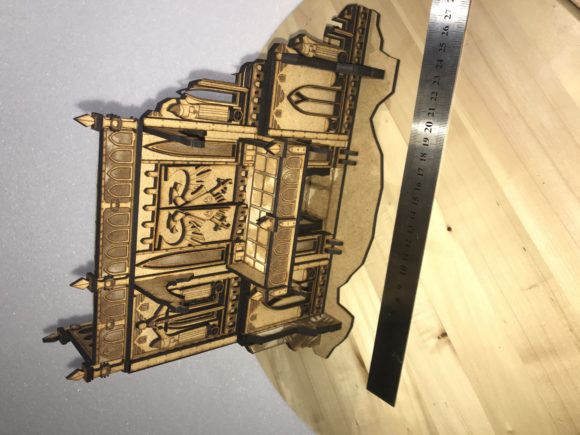
The shape is bold and upright, with a strong vertical presence. The entrance arch dominates the center, flanked by structural details that suggest shattered walls and inner chambers. The overall layout feels like a gateway into a forgotten world, which is exactly what the product title promises. For an embroidery designer, the first question is always: can this translate into thread? With the right approach, the answer is a confident yes.
This file is offered as a digital download in SVG format, made with Inkscape and ready for laser cutting. But as someone who works across both embroidery and laser cutting, I see the potential for this design to cross over beautifully into stitched projects. The architectural lines, the contrast between open negative space and dense structural areas, the sense of depth — these are qualities that can read very well in embroidery, especially when you choose the right stabilizer, thread colors, and fabric background.
The design is categorized under Ornaments and the product type is Laser Cutting, but I want to evaluate it purely from an embroidery perspective. If you are a small business owner, an Etsy seller, or a creative entrepreneur looking to expand your product line with gothic or fantasy-themed embroidery, this design deserves a close look.
How This Design Fits Into Real Embroidery Projects
Let me walk you through a real scenario. I was preparing a custom embroidered tote bag for a client who runs a local gaming store. They wanted something that felt old-world and mysterious, not cartoonish. I pulled up GOTHIC TEMPLE RUINS PART 1 ENTRANCE and started thinking about placement. The vertical orientation is perfect for the center panel of a tote bag. It draws the eye upward and creates a sense of monumentality, even on a fabric surface.
I also tested it on a heavyweight sweatshirt. The design’s strong lines and open interior spaces allowed the fabric texture to show through, which added to the ruined, weathered feel. On a black sweatshirt with metallic silver or antique gold thread, the entrance arch looked like a cathedral doorway lit by torchlight. My test stitchers commented that it felt like a piece of architecture you could walk into. That kind of emotional response is exactly what you want in a custom apparel project.
For patches, this design is a strong candidate. The clear outer boundary and internal detail make it suitable for embroidered patches that can be applied to bags, jackets, or even gaming mats. If you are an Etsy seller who offers embroidered patches for tabletop enthusiasts, you could easily build a product line around this motif. Embroidered patches with a gothic ruin theme have a dedicated audience, and this design fits that niche naturally.
I also considered it for baby embroidery — and I immediately ruled that out. This is not a nursery design. But for holiday gifts aimed at fantasy fans, for wedding gifts for couples who met at a gaming table, or for boutique products targeting the dark aesthetic crowd, it works beautifully. Personalized gifts with this design carry a sense of weight and story. They feel like artifacts, not afterthoughts.
Where the Design Shines Brightest
Based on my test runs, GOTHIC TEMPLE RUINS PART 1 ENTRANCE performs best in medium to large hoop sizes. The dimensions are given as 130x230x190mm for inner walls, which translates to a substantial embroidery area. If you are using a standard 5x7 hoop or larger, you can capture the full entrance without losing the fine details. The design needs room to breathe. When you scale it down too aggressively, the architectural lines begin to blur, and the sense of ruined grandeur fades.
Here are the product types where I saw the best results:
- Custom apparel — sweatshirts, hoodies, t-shirts, and denim jackets
- Tote bags and canvas bags — the vertical layout is ideal for center panel placement
- Embroidered patches — with a sturdy stabilizer and clear edge finish
- Pillow covers and home decor — especially on dark linen or velvet for a gothic accent
- Aprons and kitchen towels — only if the theme fits your brand or customer base
- Tabletop gaming accessories — dice bags, game mat edges, or campaign journals
The design works well with both satin stitch and fill stitch techniques. The open areas inside the arch can be left as negative space or filled with a subtle texture, depending on the look you want. I recommend using a medium stitch density to keep the design crisp without making it too stiff. The running stitch details in the structural areas add a hand-drawn quality that feels authentic to the ruins theme.
Caution Zones — When to Think Twice
Not every project is right for this design. I learned that the hard way during my first test. I tried to stitch GOTHIC TEMPLE RUINS PART 1 ENTRANCE on a lightweight cotton t-shirt, and the fabric puckered around the dense areas. The design has a lot of interior detail, and on a thin or stretchy fabric, it can pull and distort. You need a stable base. If you are working with knits, jersey, or any fabric with high stretch, use a cutaway stabilizer and test your tension carefully.
Small hoop sizes are also a challenge. If your hoop is smaller than 5x7, you will likely need to reduce the design, and that can compromise the readability of the architectural lines. The entrance arch, the wall segments, and the inner details all need a certain scale to read clearly. I would not recommend this design for caps or hats unless you are working with a large front panel and a professional-grade cap frame. The curved surface of a cap can distort the vertical symmetry of the arch, making it look uneven.
Dark fabric is your friend here. The design thrives on contrast. Light fabric with dark thread can work, but you lose some of the brooding atmosphere. Test it on both black and white backgrounds to see which version tells the story you want. I tested it on a navy blue sweatshirt with silver thread, and the result was subtle but striking. On a cream-colored tote with dark brown thread, it looked more like a sketch — interesting, but less dramatic.
Frequent washing is another consideration. If you are making a product that will be washed often, like a kitchen towel or a baby blanket, the high detail areas may wear down over time. This design is better suited for items that get occasional use or are displayed rather than heavily laundered. For commercial embroidery projects where durability is key, consider reinforcing the back with a permanent stabilizer and using high-quality thread.
Visual Impact and Customer Connection
When customers see a finished product with GOTHIC TEMPLE RUINS PART 1 ENTRANCE, they don’t just see a design. They see a story. The ruin suggests a history, a world that existed before. That is incredibly powerful for handmade products. Whether you are selling at a craft fair, listing on Etsy, or producing custom orders for a local gaming group, this design creates instant recognition among fantasy fans. It signals that you understand their aesthetic.
The design also carries a professional, cohesive look. It does not feel like a generic clip art outline. It feels like a deliberate architectural study. That raises the perceived value of your finished product. A tote bag with this embroidery can sell for a higher price point than a bag with a simple logo or text. Customers trust that the maker put thought into the design. They see the craftsmanship in the stitching, and they are willing to pay for it.
For small shop owners and Etsy sellers, this design can be a signature piece. Use it in your product photography, in your printable mockups, and in your digital design assets. It creates a consistent brand identity that appeals to a specific, engaged audience. Giftability is high among tabletop gamers, fantasy readers, and fans of gothic aesthetics. A holiday gift with this design feels intentional and personal. It is not a last-minute purchase. It is a statement.
Practical Notes from the Worktable
Before you stitch this design into a final product, here are the practical steps I recommend based on my own testing:
- Test on scrap fabric first. Use the same fabric type you plan to use for the final product. Check the stitch density, the thread tension, and the overall feel.
- Review thread color contrast. The design relies on strong contrast between the architectural lines and the background. Test at least three color combinations before committing.
- Confirm your hoop size. The design is sized for a larger working area. Measure your hoop and compare it to the design dimensions before you start.
- Inspect small details. Zoom into the SVG file and look at the thinnest lines. In embroidery, those lines will be defined by your stitch width. Make sure they will read clearly at your chosen scale.
- Test in black and white mockups. This helps you see the design’s structure without the distraction of color. If it reads well in grayscale, it will read well in thread.
- Use proper stabilizer. For dense areas, a cutaway stabilizer is essential. For lighter fabrics, a tearaway may work, but test first.
- Check licensing. Before you sell finished products or digital copies, confirm the terms of the file. The design is offered as a digital download for laser cutting, but if you are using it for embroidery, verify that your intended use — personal or commercial — is allowed.
I also recommend stitching a sample in both light and dark fabric backgrounds. You will be surprised at how different the design feels. On a dark background, the ruins feel ancient and ominous. On a light background, they feel more like a sketch or a blueprint. Both have their audience, but you need to know which one your customers prefer.
Final Thoughts Before You Stitch
GOTHIC TEMPLE RUINS PART 1 ENTRANCE is a design with a clear personality. It is not for every project, but for the right project, it is unforgettable. If you work with fantasy themes, tabletop gaming, or gothic decor, this design can become a staple in your product line. It offers depth, mood, and a sense of place that is rare in machine embroidery designs. The SVG format gives you flexibility to adjust and scale, but remember that embroidery has its own rules. Test, adjust, and test again.
I have been designing and stitching for years, and I have seen too many promising designs fail because the maker skipped the testing phase. This design deserves better. It has the bones of a classic. Treat it with the same care you would give a hand-drawn architectural sketch, and your customers will feel the difference.
Whether you are a hobbyist making a personalized gift for a gaming friend, or a small business owner building a brand around dark fantasy aesthetics, this design is worth your time. Stitch it on a tote bag, a sweatshirt, or a patch. Let the ruined entrance speak for itself. It has a story to tell, and your embroidery can bring it to life.