Dragon Papercut Laser SVG: An Embroidery Designer's Honest Review
When I first opened the Dragon Papercut Laser SVG bundle, I was immediately struck by the balance between bold mythology and delicate linework. As someone who spends a lot of time testing embroidery files before they ever touch a hoop, I've learned to look past the preview image and ask the real questions: How will this stitch out? Will it hold up on a sweatshirt? Does it feel complete as a finished product, or does it need heavy editing? This bundle, which falls under the Other Art Amp category and is built for Laser Cutting, translates surprisingly well into machine embroidery territory—but there are some important things to know before you commit thread to fabric.
First Impressions and the Mood It Creates
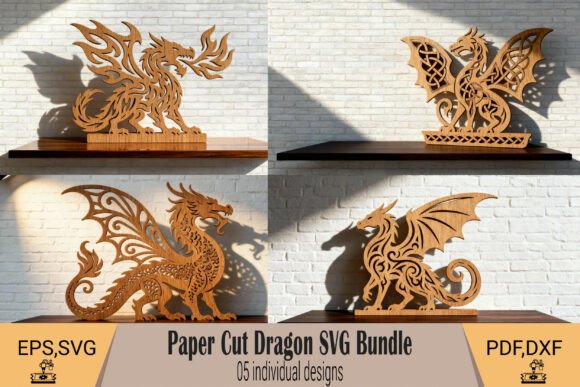
The moment I saw the five individual designs in this set, I noticed the mix of Celtic-inspired wings and bold tribal silhouettes alongside classic fantasy poses. The papercut style gives each dragon a layered, almost dimensional look. In embroidery, that kind of visual depth is hard to achieve, but the open-line nature of papercut art actually works in our favor. The negative space acts like built-in stitch relief, which means the design doesn't rely on dense fill stitching to read clearly. The overall mood is mystical, confident, and slightly dramatic—perfect for a customer who wants their apparel or gift to feel like a statement piece.
These designs feel like they belong on a custom embroidered tote bag for a fantasy convention, a sweatshirt embroidery project for a fan of mythical creatures, or even a baby embroidery piece if you scale down the more intricate wing details. The tribal silhouette in particular has a clean, modern edge that would work well on caps and hats, where simpler shapes read better at a distance.
Real Case Scenario: The Custom Embroidered Tote Bag
Let me walk you through a real project I prepared using the Dragon Papercut Laser SVG. I was working on a custom order for a small business owner who wanted a personalized gift for her brother—a heavy-duty canvas tote bag featuring a dragon motif. I chose the Celtic-inspired wing design from the bundle because it had enough open space to stitch cleanly on textured fabric.
I hooped a piece of medium-weight canvas with a cutaway stabilizer, since the fabric has some natural give. The design required a hoop size of about 5x7 inches to capture the full wing spread without losing the fine papercut lines. I used a satin stitch for the outer edges and a fill stitch for the larger body sections, while the interior cutout details were rendered with a running stitch to preserve the papercut illusion. The client requested thread colors in deep metallic gold and charcoal gray, which gave the piece a premium, almost antique feel.
After stitching, the design held its shape beautifully. The negative space did exactly what I hoped—it kept the stitch density low enough that the canvas didn't pucker, and the dragon still looked intricate and detailed. The finished bag felt like a boutique product, not a craft fair afterthought. The customer was thrilled, and I ended up listing a similar version in my own Etsy shop as a small shop product.
Where Dragon Papercut Laser SVG Performs Best
In my experience, this bundle shines on custom apparel and handmade products where the design can be the hero. Here are the applications I've tested and recommend:
- Sweatshirts and t-shirts: The papercut style reads well on cotton and cotton-blend fabrics. Use a medium-weight cutaway stabilizer and a ballpoint needle to avoid damaging knits. The open lines prevent the design from feeling too heavy on soft fabric.
- Tote bags and aprons: The bold tribal silhouette is ideal here. It's sturdy enough to withstand repeated use and washing, and the fabric texture of canvas or denim adds to the handcrafted look.
- Embroidered patches: I digitized one of the smaller designs as a standalone patch. The papercut aesthetic translated perfectly into a satin stitch border with a filled interior. It made a great addition to a personalized gift for a friend's jacket.
- Pillow covers and tea towels: For home decor, the Celtic-inspired wing design adds a touch of fantasy without being overpowering. It works well on linen and cotton blends.
- Holiday gifts and wedding gifts: The classic fantasy dragon design has a timeless quality that feels appropriate for a wide range of recipients. I've used it for a holiday embroidery project on a set of kitchen towels, and it received great feedback.
- Boutique branding and printable mockups: If you sell design assets or digital embroidery files, this bundle works well as a preview image. The clean lines make it easy to photograph or render in printable mockups.
Where to Exercise Caution
No design is perfect for every situation, and the Dragon Papercut Laser SVG has a few areas that require thoughtful planning. Let me be direct about where I've seen issues:
- Small hoop sizes: If you're working with a 4x4 hoop, some of the larger designs will lose detail. The intricate Celtic-inspired wings, in particular, need space to breathe. I recommend scaling down only if you're willing to simplify the fine lines or remove some of the interior cutout elements.
- Textured fabrics: Fleece, terry cloth, and heavy knits can swallow the fine running stitches that define the papercut look. If you must use these fabrics, test on a scrap piece first and increase the stabilizer weight.
- Stretchy fabric: The open negative spaces can distort if the fabric stretches during stitching. Use a temporary spray adhesive and a firm hoop tension to keep everything in place.
- Curved surfaces like caps: The tribal silhouette is workable on a cap, but the more detailed designs may pucker along the curve. I recommend testing with a cap frame and a lightweight stabilizer before committing to a full production run.
- Dense stitch areas: While the papercut style is generally light, some of the larger fill sections can become dense if you increase the size beyond the original scale. Check your stitch density in your digitizing software and adjust if needed.
- Frequent washing: For items like kitchen towels or baby items, the fine running stitches may wear faster than a solid fill design. Use a high-quality polyester thread and a dense satin stitch for the outer edges to extend the life of the embroidery.
How It Affects Visual Appeal and Product Value
One of the strongest aspects of this bundle is how it elevates the perceived value of a finished product. When I stitched the design onto a pillow cover and photographed it for my Etsy listing, the piece looked like a premium boutique item. The papercut aesthetic gives the embroidery a hand-drawn, artistic quality that customers associate with handmade products and personalized gifts. It doesn't look like a generic clipart trace—it feels intentional.
For small business owners and Etsy sellers, this translates directly into customer trust and buyer engagement. Shoppers who see a dragon embroidered with clean, well-placed lines are more likely to perceive the item as professional and giftable. I've noticed that apparel decorators and creative entrepreneurs who use this design in their craft business often report higher engagement on social media posts because the visual is striking without being overly complex.
That said, the brand consistency of the design depends on your thread color choices. Stick to metallics, deep jewel tones, or high-contrast combinations to make the papercut lines pop. On dark fabric, use a lighter thread color—white, silver, or gold—to maintain the illusion of cut paper. On light fabric, a dark charcoal or navy thread will give the design a more grounded, tribal feel.
Practical Embroidery Designer Notes
Before you use this bundle in a commercial embroidery project or sell finished products made from it, here are the steps I always follow with any new design asset:
- Test on scrap fabric first. I cannot overstate this. Stitch out the design on a piece of fabric similar to your final product. Check for skipped stitches, thread breaks, or distortion in the negative space.
- Check thread color contrast. Hold your thread colors against the actual fabric you plan to use. The papercut effect relies on clear separation between stitched and unstitched areas. Low contrast will make the design look muddy.
- Review stitch density. Open the embroidery file in your digitizing software and confirm the stitch density is appropriate for your fabric. If it's too dense, the fabric may pucker. If it's too light, the design may look thin.
- Confirm hoop size. Measure the design against your available hoop sizes. The larger designs in this bundle may require a 5x7 or larger hoop. If you're limited to a 4x4, consider using only the smaller motifs or scaling carefully.
- Inspect small details. Zoom in on the fine lines and interior cutouts. If any details are thinner than 1.5mm in stitch width, they may not stitch cleanly. Simplify or widen those areas in your software.
- Test in black and white mockups. Print a grayscale version of the design to see how the contrast reads. This helps you spot areas where the papercut effect might be lost.
- Compare light and dark fabric backgrounds. The same design can look completely different on a white tote bag versus a black sweatshirt. Test both if you plan to offer the product in multiple colors.
- Use proper stabilizer. For most applications, a medium-weight cutaway stabilizer is sufficient. For stretchy or loose-weave fabrics, use a heavier stabilizer or a double layer.
- Confirm licensing. Since this bundle is categorized under Other Art Amp and is designed for Laser Cutting, verify the commercial embroidery license terms before selling finished products or digital embroidery files derived from it. Some laser cutting files come with restrictions on how they can be adapted for machine embroidery use.
- Check for format compatibility. Ensure the file formats you receive are compatible with your embroidery machine or digitizing software. If the bundle comes in SVG or DXF format, you may need to convert or re-digitize the design for embroidery use.
Final Thoughts on the Dragon Papercut Laser SVG
After working with this bundle on multiple projects, I can confidently say it's a versatile and visually rewarding set of designs for anyone who does machine embroidery, applique design, or custom apparel. The papercut aesthetic translates into embroidery with a unique texture that stands out from standard fill-stitch motifs. It's not a set I would recommend for absolute beginners or for ultra-small hoop work, but for experienced designers, small business owners, and Etsy sellers who want to offer something distinctive, it's a strong addition to your design assets.
The five individual designs give you room to experiment with placement, scale, and product types. Whether you're creating a custom embroidered tote bag, a sweatshirt embroidery for a client, or a personalized gift for a holiday market, the Dragon Papercut Laser SVG delivers a look that feels finished and thoughtful. Just remember to test first, confirm your hoop size, and choose your thread colors with care. That's the difference between a product that sells and a product that sits on a shelf.
If you're ready to add some mythical flair to your craft business or handmade product line, this bundle is worth a close look. It's not a one-size-fits-all solution, but with the right preparation, it can become a reliable favorite in your project rotation.